
Verify Stark Attention Center Release
Public guidance must stay limited because youth records receive different treatment from adult jail records. Begin by identifying the responsible juvenile court through an official source such as the Ohio trial-court directory and confirm the caller’s relationship to the youth. A parent, guardian, attorney, or authorized case participant may be directed through a process that is not open to the general public. Staff may need a youth identifier or case information, but sensitive information should be provided only through the official channel and only when requested.
- Use the official MCJAS contact information, not an adult inmate-search vendor.
- State the caller’s relationship or authority without posting youth details publicly.
- Identify the responsible juvenile court and case through the court’s confidential process.
- Ask whether the authorized contact can receive placement, transfer, or release information.
- Follow any aftercare, guardian, transport, or receiving-placement instructions supplied by the youth authority.
A no-answer to a general public inquiry is not proof that the youth remains detained or has been released. It may mean the information is confidential. Likewise, the lack of an adult search result is expected and has no evidentiary value for Stark Attention Center. The release conclusion must come from the juvenile authority permitted to provide it.
Stark Attention Center Records Contact
The official MCJAS Stark Attention Center page confirms the facility identity and contact route. Use it for questions about the process available to an authorized person. Do not request a public roster, booking photograph, adult release sheet, or public release feed as though the center were the Sheriff’s jail.
Stark Attention Center
Multi-County Juvenile Attention System
815 Faircrest Street SW
Canton, OH 44706
Phone: 330-484-6471
Facility type: Locked secure youth detention
When contacting the center, keep the first inquiry procedural. Ask which office may speak with the caller, what proof of authority is required, and whether the responsible juvenile court must handle the request. Avoid sending a youth’s full personal details through an unofficial form or public message. If MCJAS directs the caller to the court, follow that route rather than treating the referral as a refusal to confirm release.
The official facility page is shown below through its MCJAS source.
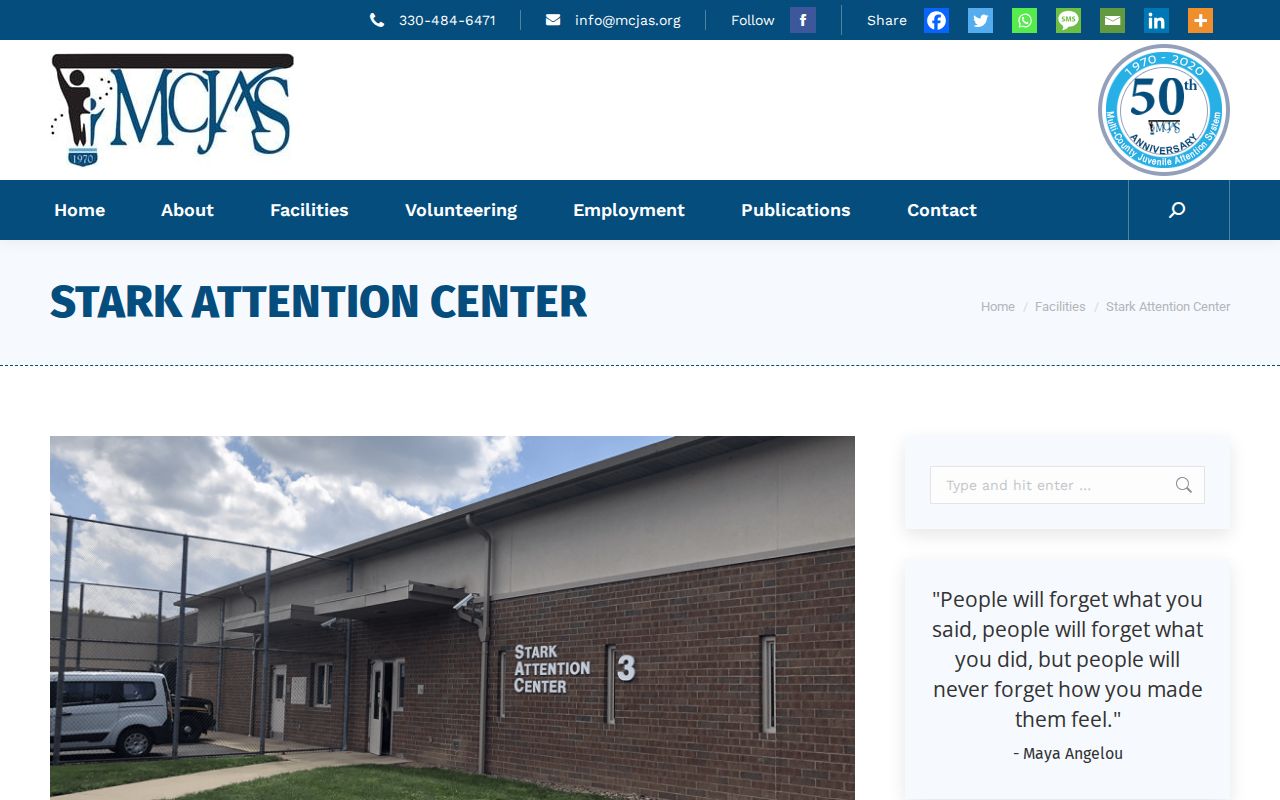
The image confirms the juvenile facility context that controls the release path and rules out an adult jail lookup.
Stark Attention Release Tool Limits
Stark County Jail is an adult Sheriff facility. Stark Attention Center is not part of its public adult custody pathway. Even if both buildings serve people connected to Stark County courts, the records and legal protections differ. A current or released adult jail lookup cannot confirm where a youth is placed or whether the youth left detention.
| System | Use for Stark Attention Center? | Reason |
|---|---|---|
| Stark County Jail record | No | Adult county-jail custody only |
| ODRC Offender Search | No | Adult prison, judicial-release, and APA records |
| BOP inmate locator | No | Federal adult custody, not local youth detention |
| ICE public locator | No for youth release confirmation | Does not control MCJAS juvenile placement |
| MCJAS and juvenile court | Yes, subject to authority | They control the youth detention and court record |
Ohio VINE’s official older brochure discusses youth coverage in a distinct way, including an ID-required telephone process for ODYS youth. Stark Attention Center, however, is operated by MCJAS rather than DYS. Do not transfer the adult VINELink interface or the DYS facility instructions onto this center without direct, current confirmation from the responsible juvenile authority.
Note: A blank adult search result is normal for a youth facility and cannot be described as evidence of release.
Stark Attention Center Release Meaning
For youth detention, “release” must be tied to the authority and destination. Return to a parent or guardian is different from transfer to another secure or nonsecure placement. A court-approved move can end custody at Stark Attention Center while the juvenile case and services continue. Aftercare, supervision, schooling, treatment, transport, and family arrangements may remain confidential.
- Release
- The end of custody at Stark Attention Center under juvenile authority.
- Placement
- A court or youth-system setting selected for care, services, or secure custody.
- Transfer
- Movement from this center to another authorized youth setting, not a return home.
- Aftercare
- Services or oversight that may follow a youth’s departure from a facility.
The wording used by the court or MCJAS should be preserved. If an authorized source confirms transfer, describe transfer. If it confirms return to a guardian, do not add unsupported claims about the end of court involvement. If the source only explains that no public information is available, respect that boundary and do not use adult tools to fill the gap.
Resolve Stark Attention Release Conflicts
Different messages can reflect timing or authority. A juvenile court can enter an order before the center completes transport or other release steps. A family may receive instructions that are not visible in a public docket. Another agency may hold the next placement record. The safest statement is limited to what the authorized source has confirmed.
Identity matching still matters, but the solution is not to gather and publish more youth details. Use the case or youth identifier only within an official, protected exchange. Similar names, age changes, and a multi-county service structure can produce mistakes when someone tries to join public fragments. MCJAS or the responsible court can determine whether the inquiry concerns the correct youth.
The Stark County custody-system overview distinguishes adult jail, regional adult programming, and youth facilities. Its adult search paths should not be read as alternate ways around juvenile confidentiality. The facility type determines the lawful record path.
Stark Attention ICE Release Limits
An adult county jail release can sometimes become an ICE transfer. That adult rule does not control a Stark Attention Center youth release. The ICE public locator also states that records for people under 18 are not searchable. A missing ICE result therefore cannot establish anything about a youth’s detention, release, or placement.
If an authorized juvenile case participant is told that a federal immigration authority is involved, the participant should use counsel, the juvenile court, and the official agency contacts supplied for that case. Do not publish an A-number, birth date, location, or immigration information about a youth. The general ICE explanation about detainers and a 60-day released-person locator is not a substitute for confidential juvenile procedure.
This distinction prevents two serious errors. It avoids presenting adult ICE tools as controlling a youth record, and it avoids claiming that leaving MCJAS means return to the community when another authorized placement may follow. The juvenile court remains the source of the legal direction.
Protect Stark Attention Release Privacy
Only the minimum necessary information should be exchanged. A lawful family or legal need does not justify placing a youth’s name, photograph, case details, or location into public posts. Start with the official phone number and ask how to authenticate. Use secure channels provided by MCJAS, counsel, or the court.
No official public Stark Attention Center release list, adult-style roster, booking-photo archive, or public field inventory was established in the research. That is a boundary, not a missing feature to replace with unofficial sources. Confidentiality can prevent a public answer even when an authorized person can receive one.
A careful release statement names only the confirmed custodian change and does not expose protected facts. For most public readers, the useful answer is procedural: MCJAS and the responsible juvenile court control the record, adult locators do not apply, and public access is restricted.